EU deal targets Big Tech over hate speech, disinformation
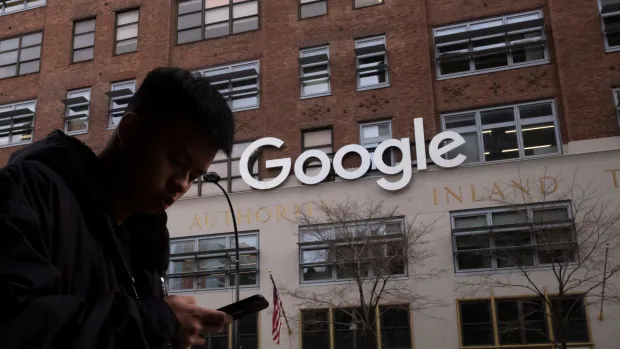
The European Union reached a landmark deal early Saturday to take intention at hate speech, disinformation and different dangerous on-line content material.
The regulation will pressure massive tech firms to police themselves more durable, make it simpler for customers to flag issues and empower regulators to punish noncompliance with billions in fines.
EU officers lastly clinched the settlement in precept within the early hours of Saturday. The Digital Companies Act will overhaul the digital rulebook for 27 nations and cement Europe’s status as the worldwide chief in reining within the energy of social media firms and different digital platforms, reminiscent of Fb, Google and Amazon.
“With the DSA, the time of massive on-line platforms behaving like they’re ‘too massive to care’ is coming to an finish,” mentioned EU Inner Market Commissioner Thierry Breton.
EU Fee Vice President Margrethe Vestager added that “with at this time’s settlement we be certain that platforms are held accountable for the dangers their companies can pose to society and residents.”
The act is the EU’s third vital regulation concentrating on the tech business, a notable distinction with the U.S., the place lobbyists representing Silicon Valley’s pursuits have largely succeeded in preserving federal lawmakers at bay.
Whereas the Justice Division and Federal Commerce Fee have filed main antitrust actions towards Google and Fb, Congress stays politically divided on efforts to deal with competitors, on-line privateness, disinformation and extra.
Accountable for customers’ content material
The EU’s new guidelines, that are designed to guard web customers and their “elementary rights on-line,” ought to make tech firms extra accountable for content material created by customers and amplified by their platforms’ algorithms.
Breton mentioned they’ll have loads of persist with again up their legal guidelines.
“It entrusts the Fee with supervising very giant platforms, together with the chance to impose efficient and dissuasive sanctions of as much as 6 per cent of worldwide turnover or perhaps a ban on working within the EU single market in case of repeated severe breaches,” he mentioned.
The tentative settlement was reached between the EU parliament and member states. It nonetheless must be formally rubber-stamped by these establishments however ought to pose no political drawback.
“The DSA is nothing in need of a paradigm shift in tech regulation. It is the primary main try to set guidelines and requirements for algorithmic programs in digital media markets,” mentioned Ben Scott, a former tech coverage advisor to Hillary Clinton who’s now government director of advocacy group Reset.
Negotiators had been hoping to hammer out a deal earlier than French elections Sunday. A brand new French authorities might stake out completely different positions on digital content material.
The necessity to regulate Massive Tech extra successfully got here into sharper focus after the 2016 U.S. presidential election, when Russia was discovered to have used social media platforms to attempt to affect the nation’s vote. Tech firms like Fb and Twitter promised to crack down on disinformation, however the issues have solely worsened. Throughout the pandemic, well being misinformation blossomed and once more the businesses have been gradual to behave, cracking down after years of permitting anti-vaccine falsehoods to thrive on their platforms.
Instruments to flag content material
Below the EU regulation, governments would be capable to request firms take down a variety of content material that might be deemed unlawful, together with materials that promotes terrorism, youngster sexual abuse, hate speech and business scams. Social media platforms like Fb and Twitter must give customers instruments to flag such content material in an “simple and efficient method” in order that it may be swiftly eliminated. On-line marketplaces like Amazon must do the identical for dodgy merchandise, reminiscent of counterfeit sneakers or unsafe toys.
These programs can be standardized in order that they’ll work the identical method on any on-line platform.
The tech giants have been lobbying furiously in Brussels to water down the EU guidelines.
Twitter mentioned Saturday it could evaluate the principles “intimately” and that it helps “good, ahead pondering regulation that balances the necessity to sort out on-line hurt with defending the Open Web.”
Google mentioned in an announcement on Friday that it appears to be like ahead to “working with policymakers to get the remaining technical particulars proper to make sure the regulation works for everybody.” Amazon referred to a weblog publish from final 12 months that mentioned it welcomed measures that improve belief in on-line companies. Fb did not reply to requests for remark.
The Digital Companies Act would ban adverts focused at minors, in addition to adverts focused at customers primarily based on their gender, ethnicity and sexual orientation. It will additionally ban misleading strategies firms use to nudge folks into doing issues they did not intend to, reminiscent of signing up for companies which can be simple to decide into, however laborious to say no.
Annual danger assessments
To point out they’re making progress on limiting these practices, tech firms must perform annual danger assessments of their platforms.
Up till now, regulators have had no entry to the internal workings at Google, Fb and different widespread companies. However underneath the brand new regulation, the businesses must be extra clear and supply data to regulators and unbiased researchers on content-moderation efforts. This might imply, for instance, making YouTube flip over information on whether or not its advice algorithm has been directing customers to extra Russian propaganda than regular.
To implement the brand new guidelines, the European Fee is anticipated to rent greater than 200 new staffers. To pay for it, tech firms can be charged a “supervisory payment,” which might be as much as 0.1% of their annual world internet revenue, relying on the negotiations.
The EU reached a separate settlement final month on its so-called Digital Markets Act, a regulation aimed toward reining available in the market energy of tech giants and making them deal with smaller rivals pretty.
And in 2018, the EU’s Common Knowledge Safety Regulation set the worldwide commonplace for information privateness safety, although it has confronted criticism for not being efficient at altering the behaviour of tech firms. A lot of the issue centres on the truth that an organization’s lead privateness regulator is within the nation the place its European head workplace is positioned, which for many tech firms is Eire.
Irish regulators have opened dozens of data-privacy investigations, however have solely issued judgments for a handful. Critics say the issue is understaffing, however the Irish regulator says the instances are advanced and time-consuming.
EU officers say they’ve realized from that have and can make the bloc’s government Fee the enforcer for the Digital Companies Act and Digital Markets Act.