Artist Barbara Bloom and Writer Ben Lerner Interview About ‘Gold Custody’ – RisePEI
The connection between writers and artists tends to be a one-way road. Artists make, writers critique. However in Gold Custody, a brand new guide by artist Barbara Bloom and poet/novelist Ben Lerner, response and creation is a simultaneous, collaborative course of.
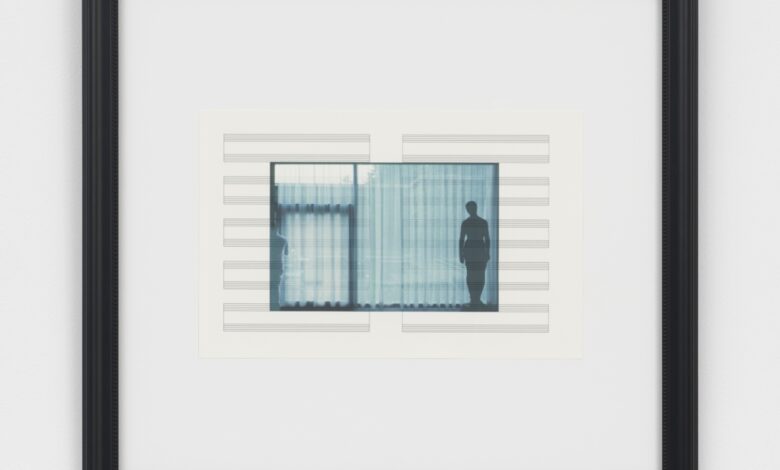
Gold Custody is slight; it’s no gargantuan espresso desk guide, nevertheless it’s no slim novel both. It’s composed of a collection of 13 prose-poems by Lerner, that are framed and partially impressed by Bloom’s images, which in flip have been pulled out and regathered in response to Lerner’s texts. Bloom’s images from the guide have been exhibited at David Lewis Gallery’s East Hampton put up earlier in July.
Associated Articles

This isn’t the primary time Lerner has collaborated with an artist in the same of mode of name and response. In The Polish Rider (2018) which he made with artist Anna Ostoya, Lerner quick a bit of fiction about Ostoya and an evening that she misplaced two of her work. The quick story is interspersed with the collection of work that had initially impressed Lerner’s fiction and, to crown the entire thing, Ostoya made a brand new portray that responded to the mission itself.
In Gold Custody, collaboration appears to be greater than response, however co-creation.
In an interview with Barbara Bloom and Ben Lerner, the pair focus on the subtleties of their collaboration, the themes that encourage them, and the tales that introduced Gold Custody to life.
ARTnews: How did this collaboration start?
Barbara Bloom: Incrementally. Ben and I had an appreciation for one another’s work and have associates in frequent and that mutual appreciation had been communicated. We emailed one another slightly bit. I used to be requested to do a fairly giant, collaborative mission and I requested Ben if he would work with me. Like most of the issues that have been deliberate pre-pandemic, the mission simply dissipated, it didn’t truly occur. So we discovered ourselves in the course of desirous about a mission and it was Ben who instructed that we may simply proceed working, however in guide kind.
Ben Lerner: The transfer from actual area to the bizarre form of digital area of a guide felt like a very good alternative, not simply to maintain working within the pandemic, however that in and of itself this was a second of reframing which is a shared concern of each of ours and like an abiding level of contact. I believe that course of is definitely fairly germane with the substance of the work and Barbara’s work extra particularly.
Bloom: I believe we share an curiosity within the depiction of time and the not possible depictions of time, the place it stretches and the place it will get forgotten and the place you possibly can step by way of
Once I first learn Ben’s work I spotted “Oh my god, right here’s this one who additionally has a stretchiness in time with out it being a science fiction, or with out it being magic realism.”
ARTnews: Evidently writers all the time have lots to say about artists and artwork, that’s, there’s a form of one-way road form of relationship between writers and artists. I used to be questioning for you, Barbara, what can artists form of acquire from responding to writing and writers?
Bloom: I’m very jealous of writers and I believe Ben may be jealous of artists. I’m very jealous of writers who don’t want the concrete world, who can let issues construct and slip in time. I all the time form of jokingly say that I believe I’m truly a author, however stood within the flawed line and obtained signed as much as be an artist.
Working with Ben, I used to be a scholar of writing in a roundabout way, a scholar of the distinction between working the way in which that I work within the visible world and within the writing world. However my objective on this mission was to not illustrate Ben’s textual content. My objective was to attempt to formally perceive what Ben was doing in these texts, and to offer some form of visible equal, which is totally different than illustrating them.
Ben would throw me these texts that have been by some means loosely or much less loosely associated to my works after which I’d throw again photos that go along with them and that typically I’d ship stuff to Ben and he can be like “You’re off, you’ve targeting some side of this that’s most likely much less vital than one thing else.”
ARTnews: What was the method?
Lerner: There have been every kind of beginning locations for me. Barbara had a piece which is made up of those particulars from Vermeer, and I questioned what would it not imply to make a poem that was made up from particulars, however from a catalog. The Pearl grew to become a response to the language from artwork catalogs. It’s all these totally different descriptions of girls in artworks and that’s the place I obtained virtually all of the language which I then altered slightly little bit of it. That is additionally in relation to Barbara’s work, which is discovered and altered in order that the border between the discovered and the unique is blurred. In order that’s an instance of a proper process, typically [the connection between the text and the art work] was that direct.
However then typically we might be having a dialog about her dad or we’d be speaking a few telephone name and I’d join that to summary issues like the priority about abstraction itself. Our course of wasn’t mere process, it was knowledgeable by the contingencies of dialog which have been then caught up within the extra summary equipment of the poems.
Bloom: There’s a level by which the work itself form of takes over, there are specific topic issues that you just’re probably not conscious of, however turn out to be central. Ben and I’d joke with one another about the truth that he’s turn out to be so Jewish. And we’re very secular, he’s from Kansas and I’m from California and my household has no relationship to the Holocaust. However rapidly there’s all this textual content and dialog about fathers and to Jewish traditions.
Lerner: One of many themes is reframing, what occurs when an intergenerational story seems to be revealed as false, and immediately this factor you have been residing as reality seems to be a fiction and your life is form of reorganized by this revelation?
Bloom: I need to describe what a Talmudic textual content is. It’s a rectangle of textual content. After which round that textual content is the written response to the textual content, from a 12 months or just a few years after, or a whole bunch of years afterwards. And people responses are the frames for the textual content, truly typeset on the web page framing the textual content. It’s visually one of the vital outstanding typographic belongings you’ve ever seen. It’s a literal framing of concepts. When somebody first described it to me, I believed, “Oh my god, that is precisely what a guide or what a textual content or what an art work must be.” Wouldn’t it’s great should you made an art work in 1999 after which afterward you framed it with one other art work that you just made?
Lerner: The Talmudic textual content is a form of instance of collaboration as a visible object and textual object that unfolds throughout time. It’s considerably comical, in a roundabout way, that authority over time is form of emptying out and refilling.
Talking of reframing: A kind of prose poems is a few girl who’s studying that each one of those sayings that her father had, that she thought have been like Jewish Ukrainian people scenes, turned out to be simply shit he had made up. Ought to we speak about Caspar Rappaport?
Bloom: So the guide is devoted to Caspar Rappport. This story got here up in one in every of our conversations about fathers and false authority. I informed Ben about this story that my dad would inform my sisters and I out of nowhere. He’d say, “If I don’t come house from work, you’re going to listen to tales about me and it’s going to be an phantasm. On the Santa Monica Pier, and there’s going to be crimson herrings. It’s gonna appear like I jumped off the pier, however truly I’ve a automobile ready and I’ve pushed all night time and all day, all day and all night time, to Tucumcari, New Mexico. I’ve modified my identify to Casper Rappaport. I promote life insurance coverage.” We didn’t know what he was speaking about, that that was his out from being a dad within the ’50s with three youngsters. It wasn’t in the least horrifying or disconcerting or something about it. He was simply telling us this shaggy dog story about an alternate actuality by which he lived in Tucumcari, New Mexico and adjusted his identify to Casper Rapoport.
Lerner: Wasn’t there extra, didn’t you study extra about the place he obtained the story from later?
Bloom: No … truly, sure. We have been in Egypt in a resort and my sisters and I have been in my mother and father room the place they have been on the brink of go for dinner. The black and white TV is on and the Billy Wilder film The Condominium is on, and each line from that film is my dad’s complete shtick. I requested him about it and he was like, “What, you didn’t know?”
ARTnews: Have been there any textual predecessors that impressed Gold Custody? Something that helped information the format?
Lerner: We wished it to not be big and weigh 1,000 kilos. Its kind needed to be on the cusp of studying and looking out, each issues needed to be doable, but in addition in order that it might unfold in time as a result of lots of artwork books don’t actually really feel like they’re unfolding in time in the identical means as a result of they’re so monumental. I believe we’ve invented one thing.
Bloom: We don’t even bear in mind what we’re stealing.