‘Projecting the future’ at first net-zero drive-in in Canada
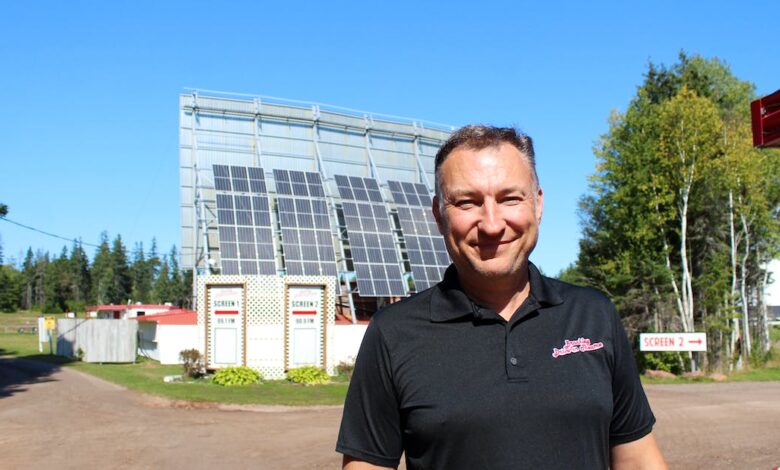
BRACKLEY, P.E.I. — P.E.I.’s historic drive-in has taken vivid steps in the direction of the long run by going photo voltaic.
The Brackley Drive-In Theatre has offered P.E.I. residents and guests with summer season leisure for nearly 70 years. This 12 months, photo voltaic panels are being put in to make sure the custom might proceed for years to come back.
The drive-in would be the first solar-powered drive-in in Canada – probably the world, mentioned proprietor Bob Boyle throughout an interview with SaltWire Community final month.
“We needed to see how might we scale the drive-in so it may function it doesn’t matter what the state of affairs,” mentioned Boyle. “I needed it to be a trailblazer for the tourism trade.”
The thought began final fall after a second 12 months of gradual tourism as a result of COVID-19. Boyle started doing analysis into photo voltaic know-how and realized the drive-in was in a major location to put in photo voltaic panels.
The again of the display was dealing with south – an excellent placement for panels.

“We had been fairly lucky that our display traces up completely with the place you’d wish to put a photo voltaic financial institution. It’s sort of like a dream.”
– Bob Boyle
The undertaking was solely potential due to the Tourism Restoration Fund, which offered about 40 per cent of the price. In any other case, it could have been too pricey.
Boyle utilized for the photo voltaic provincial rebate program, but it surely solely accounted for about $10,000 of the undertaking, which price about $110,000 from begin to end.
The photo voltaic rebate the province gives for industrial companies just isn’t excessive sufficient to make a return on the funding for smaller operators, mentioned Boyle.
Industrial rebates are significantly decrease, with $1,000 per kilowatt coated versus $350 {dollars} per kilowatt for residential rebates.
“With out the (Tourism Restoration) fund, this undertaking wouldn’t be potential. With out that, we had been taking a look at a 12- to 15-year payback, whereas most householders with the rebates that they obtain get a five- to seven-year payback,” he mentioned.
The answer is for future photo voltaic rebate packages to supply extra assist for companies – in any other case there is no such thing as a incentive.
“Many P.E.I. operators haven’t gone down the photo voltaic route. I believe the reason being the boundaries on the incentives to have energy on their property is simply too excessive to get previous.”
Boyle mentioned he hopes all through this course of, companies targeted on tourism can get on board, and the provincial and federal authorities can provide you with packages to focus on these operators and get them concerned in attending to net-zero emissions.
“If we’re actually actually critical about getting P.E.I. to net-zero, that’s the puzzle.”

Hansen Electrical was employed for the set up because it largely works with industrial companies to put in photo voltaic panels.
“I believe that is nice. When (Boyle) introduced this concept to us, we thought that it was a cool undertaking, so we bought collectively and got here up with the plan,” mentioned Sean Callaghan, common supervisor and co-owner of Hansen Electrical.
It took about six months to put in the 50 panels on the again of the display. Panels had been additionally positioned on the roof of the neighbouring lodge, which is being transformed to photo voltaic power. As a result of they’re a seasonal enterprise, the panels can generate sufficient energy to maintain the drive-in into subsequent 12 months.
When the undertaking is accomplished, the drive-in can be 90 per cent off-grid on the facility it’s utilizing, mentioned Callaghan.
“The way in which grid tie works is your credit score’s function for that annual 12 months and into subsequent October. The drive-in is simply seasonal, so we’re at a 90 per cent offset,” he mentioned.
Hansen Electrical is presently within the strategy of setting the transformers to match the grid. The work is predicted to be completed within the subsequent few weeks.
Rafe Wright is a Native Journalism Initiative reporter, a place coated by the federal authorities. He writes about local weather change points for the SaltWire Community in Prince Edward Island and might be reached by e-mail at [email protected] and adopted on Twitter @wright542.